Why Integrating Medical Scribe Software is the Future of Healthcare Efficie
Right now, doctors face more paperwork than ever, pulling focus away from actual care. Late nights find many still stuck entering data into screens instead of resting. Because of rising stress and exhaustion, some clinics choose new tools that listen and write during visits. These programs capture what happens in appointments, turning speech into clear visit summaries. With help from such systems, physicians gain breathing room, ease mental strain, then turn fully toward those they treat.
The Paperwork Load and Online Fixes
Years went by with digital medical files supposed to make things faster, smoother. Yet doctors wound up buried under piles of repetitive typing instead. Research after research reveals one thing clearly: each sixty minutes at the bedside means many more juggling paperwork. That tilt – time given here versus there – has quietly drained energy from clinics everywhere.
Right there where paperwork slows things down, smart software steps in quietly. Not by making physicians type like office workers, but through soft listening during checkups. As voices rise and fall in an exam room, the system picks up key details – what hurts, how long, any changes seen on touch or test. Hidden tech turns spoken words into clear records without fingers hitting keys. Conversation moves freely now, unbroken by keyboards interrupting eye contact or pauses filling forms. This shift restores rhythm to visits that had been lost.
How Intelligent Automation Transforms Clinical Workflows
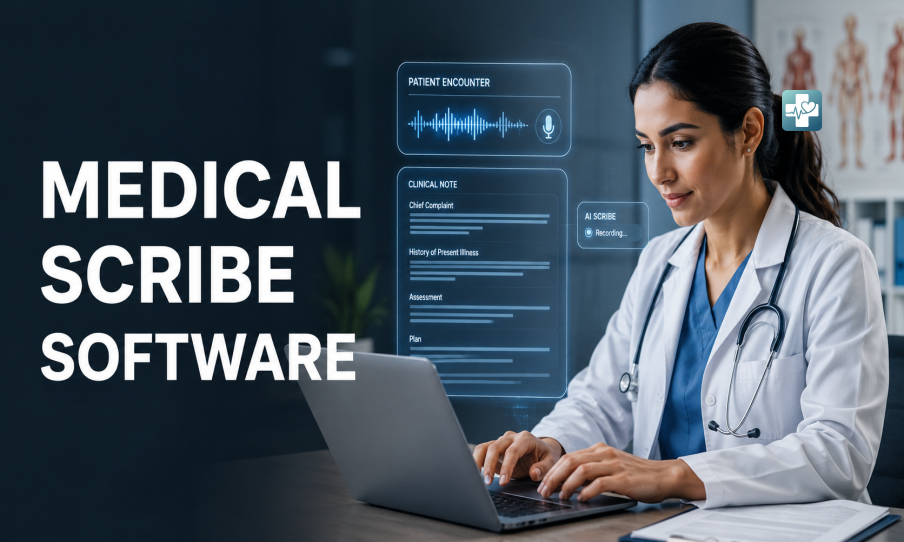
Understanding how this technology integrates into a bustling clinic is essential for appreciating its value. When a physician utilizes medical scribe software, the process requires minimal disruption to their established habits. The clinician simply activates the application on a secure mobile device or computer at the beginning of an appointment. As the patient describes their symptoms and the doctor discusses potential interventions, the background medical scribe software securely processes the audio in real time.
The software is specifically calibrated to filter out casual small talk while capturing pertinent clinical data, such as medication dosages, symptom timelines, and diagnostic hypotheses. Once the consultation concludes, the medical scribe software generates a highly accurate, structured draft of the clinical note within minutes. The provider then reviews, edits, and approves the note before seamlessly exporting it into the primary electronic health record platform. This streamlined workflow eliminates the traditional lag time associated with dictation or manual charting, ensuring that patient files are updated almost instantly.
Enhancing the Patient-Provider Relationship
Beyond the clear operational advantages, the human element of care receives the greatest boost from automation. When a doctor is forced to stare at a computer screen to type notes during an appointment, the patient often feels ignored or disconnected. This lack of eye contact and presence can erode the therapeutic trust that is foundational to effective medicine. Implementing medical scribe software fundamentally changes the dynamic within the examination room.
With the ambient medical scribe software handling the documentation in the background, the physician can sit face-to-face with the patient, listen actively, and pick up on subtle non-verbal cues. Patients report feeling more heard, valued, and satisfied with their care when their provider is fully present. Furthermore, because the medical scribe software captures the conversation accurately, there is a significantly lower risk of forgetting critical details that might otherwise be lost if a provider attempts to chart from memory at the end of a long day.
Overcoming Security and Implementation Challenges
Transitioning to automated documentation solutions naturally raises valid questions regarding data security and technological adaptability. Fortunately, enterprise-grade medical scribe software is engineered to meet the highest standards of data privacy and regulatory compliance. These systems utilize sophisticated encryption protocols to ensure that all audio recordings and generated text remain entirely secure, adhering strictly to HIPAA and other international patient confidentiality laws.
Moreover, modern platforms are designed with intuitive user interfaces that require very little technical training. The onboarding process for medical scribe software is remarkably swift compared to traditional legacy systems, allowing medical practices to realize a return on investment almost immediately. As healthcare continues to evolve, the widespread adoption of medical scribe software will undoubtedly shift from a competitive advantage to an absolute operational necessity for sustainable clinical practice.