Redefining Heart Care: How Interventional Cardiology Saves Lives in Critical Moments 
Most people think of strength when they picture the heart, still it can fall prey to problems needing fast care. Surgery used to be the only way through the chest for fixing bad blockages or flaws inside. But things changed sharply once a new kind of medicine took root. From tiny entry points doctors now guide thin tubes into the heart itself. These procedures skip cutting wide open, using threading tools instead to see and repair damage deep within. Heart care has a specialty that uses thin tubes to fix problems inside the organ, skipping big cuts. Recovery happens quicker because the body isn’t opened wide. Scars stay small since tools slide through blood vessels instead. Risks tied to surgery drop when blades aren’t needed. Change moves fast in how doctors handle circulation issues. Grasping what this field brings helps make sense of today’s medical paths.
The Evolution and Scope of Catheter-Based Care
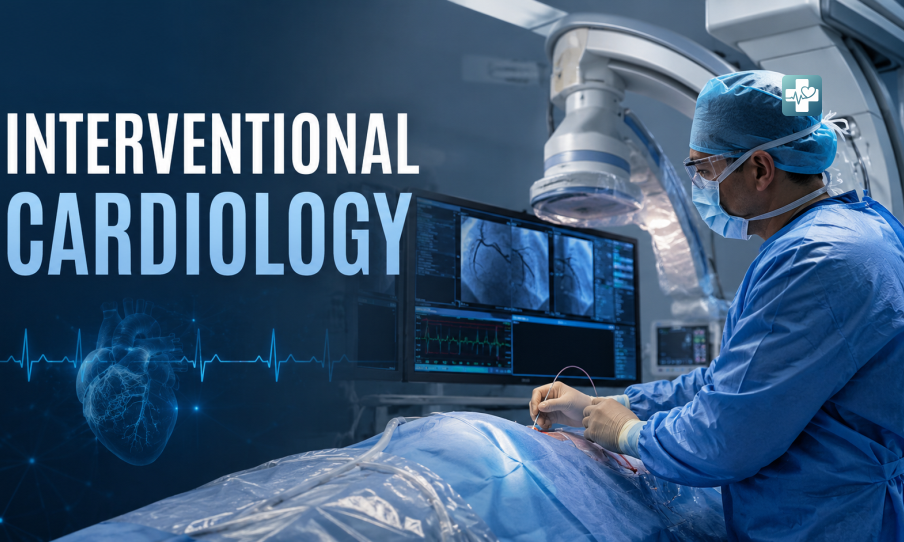
Most of what makes this area of medicine stand out lies in its middle ground – neither pills nor major surgery. A key tool? Thin, bendable tubes called catheters. From the groin or wrist they go, sliding gently along blood paths. Real-time scans show the way as a doctor moves forward carefully. Right there, inside active circulation, fixes happen without wide-open cuts. Precision comes alive when tools meet vision deep within the body. Back then, someone with a badly clogged artery would face major surgery and months of slow healing. These days, thanks to advances in heart catheter techniques, many leave the clinic almost immediately after treatment – turning what used to be a frightening ordeal into a quick fix done in hours.
Precision Techniques That Restore Blood Flow
At the heart of this medical specialty are specific procedures designed to clear obstructions and restore vital blood flow to cardiac tissues. The most common intervention is angioplasty, where a tiny balloon is inflated inside a clogged artery to widen the passage. In most cases, this is followed by the placement of a stent, a small mesh tube that acts as a scaffold to keep the artery permanently open. The practice of interventional cardiology has masterfully refined these techniques over the years, introducing drug-eluting stents that slowly release medication to prevent the artery from narrowing again. Beyond clearing blockages, specialists also handle complex structural repairs, such as replacing faulty heart valves through the blood vessels. Every innovation introduced within interventional cardiology aims to maximize the therapeutic benefit to the patient while minimizing the physical trauma inflicted on the body, showcasing a perfect marriage of engineering and biological science.
Timeliness and Success in Emergency Situations
While elective procedures significantly improve a patient’s quality of life, the true power of this medical discipline is most vividly displayed during emergency scenarios, particularly acute heart attacks. When a blood clot suddenly blocks a major coronary artery, every single minute that passes results in the irreversible death of heart muscle cells. The rapid deployment of interventional cardiology protocols in modern hospitals has dramatically cut down the time between a patient arriving at the emergency room and the opening of their blocked artery. Emergency angioplasty has become the gold standard of care worldwide, replacing clot-dissolving drugs because it offers a much higher success rate and a lower risk of dangerous bleeding complications. The widespread availability of interventional cardiology resources ensures that teams are constantly on standby, ready to perform life-saving interventions at a moment’s notice, ultimately saving countless lives and preserving long-term heart function.
The Promising Horizon of Cardiovascular Innovation
Looking toward the future, the boundaries of what can be accomplished through minimally invasive means continue to expand at a breathtaking pace. The ongoing research within interventional cardiology is currently focusing on integrating artificial intelligence and robotic-assisted navigation systems to enhance procedural precision even further. Imaging technologies are becoming so sophisticated that physicians can view three-dimensional, high-definition maps of a patient’s unique vascular anatomy during the procedure itself. Furthermore, the development of fully bioresorbable stents—which dissolve naturally after the artery heals—promises to leave behind a completely natural blood vessel free of permanent metallic implants. As interventional cardiology continues to pioneer these sophisticated advancements, the reliance on highly invasive thoracic surgeries will likely decrease even further, paving the way for an era where even the most daunting cardiac conditions can be corrected with a simple, painless puncture through the skin.