The Legacy of King Solomon: Wisdom, Wealth, and the Divided Kingdom 
The historical development of the ancient Near East is inseparable from the lives and deeds of various prominent figures, among which the kings of the united Israel are undoubtedly the most revered ones. However, among them, King Solomon remains the most prominent one: his vast knowledge, outstanding achievements, and, ultimately, inevitable fall have become part of history. In the ancient narrative about him, one can see how great ruler he was, how successfully he developed the country, and what fatal mistake led to the decline of his power and influence. This paper aims to explore his early life and reign in order to assess him from multiple points of view.
Early Life and the Throne Inheritance
Following the death of King David, the new king, who seemed to be the most successful in David’s sons, had to struggle to gain power. Solomon was born in Jerusalem to King David and Bathsheba. Despite the promising nature of his candidacy, the succession crisis broke out when David’s health began to decline. Many of his sons wanted to take advantage of the old king’s frailty, and several confrontations occurred between David and his sons. Still, the wise woman and the prophet Nathan convinced David to make Solomon his successor. Thus, the new king was around twenty or thirty years old when he was forced to usurp his brothers and kill those who openly stood against him. Subsequently, he gathered his soldiers and strengthened his army.
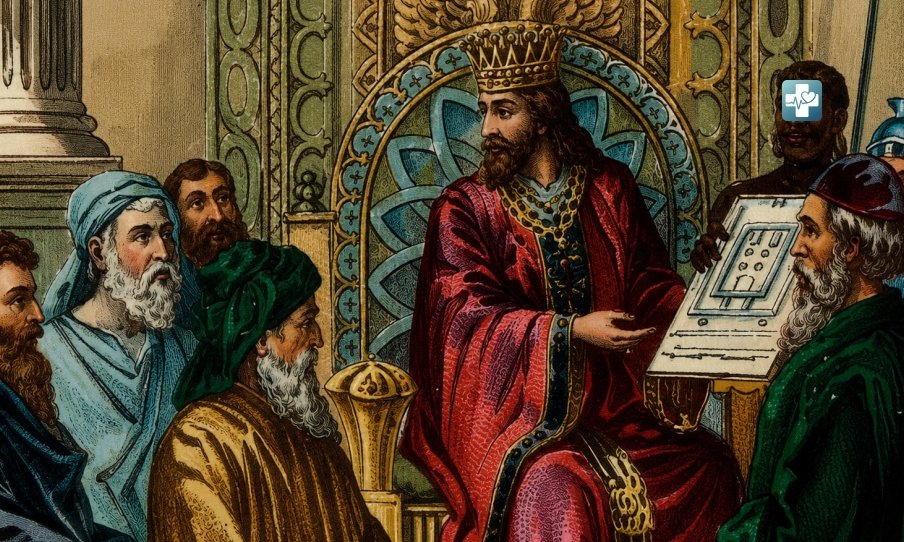
Beyond administrative restructuring, the young ruler sought divine guidance to manage his massive responsibilities. According to historical traditions, when offered any gift by the Creator in a dream, King Solomon bypassed requests for personal wealth, long life, or the defeat of his enemies, choosing instead to ask for an understanding heart to discern between good and evil. This selfless request pleased the divine, resulting in a legendary gift of unparalleled insight that would define his entire administration. The most famous demonstration of this gift involved two mothers claiming the same infant, where the ruler proposed dividing the child in half, successfully revealing the true mother through her willingness to surrender her child to save its life.
Opulence and the Golden Age of Israel
Under this enlightened leadership, the ancient kingdom experienced an era of commercial prosperity and international prestige that was never truly replicated in its history. King Solomon recognized that the true strength of an empire lay not just in military might, but in robust economic alliances and global trade networks. He maintained and expanded a highly profitable relationship with King Hiram of Tyre, launching joint maritime expeditions to exotic, distant lands like Ophir and Tarshish. These voyages brought back immense treasures, including silver, ivory, sandalwood, and tons of gold, turning the capital city into a bustling hub of ancient luxury.
This vast influx of wealth directly fueled monumental construction projects that reshaped the geography of Jerusalem. The crown jewel of these efforts was the legendary temple built as a permanent resting place for the Ark of the Covenant. For over a decade, King Solomon organized thousands of laborers and utilized the finest materials, from Lebanese cedar to solid gold plating, to finish this historic sanctuary. Following the completion of the temple, he spent over a dozen years constructing an expansive royal palace complex, which featured mechanical wonders like an opulent throne with moving parts, alongside massive defensive walls and sophisticated water systems to safeguard the growing population.
The Weight of Royal Excess
However, the very elements that brought international renown to the empire eventually led to its spiritual and political downfall. To secure peace and cement strategic alliances with neighboring superpowers like Egypt, Moab, and Ammon, King Solomon accumulated hundreds of foreign wives and concubines. While these marriages successfully prevented devastating wars, they introduced diverse cultural and religious practices into the heart of the capital. Over time, the ruler began to tolerate and even actively support the worship of foreign deities, constructing specialized altars for gods like Ashtoreth and Milcom to please his royal partners.
This shift in religious devotion drew severe criticism from contemporary scribes and prophets, who viewed it as a direct violation of sacred covenants. Furthermore, maintaining an empire of such grand scale required heavy taxation and forced labor from the regular citizens, creating deep undercurrents of resentment among the twelve tribes of Israel. The spiritual drift of King Solomon, combined with the growing economic burden placed upon his subjects, eroded the internal unity of the state. Although the kingdom remained intact during his forty-year reign, the structural fractures were deep, waiting for a catalyst to split the nation apart.
A Complex Legacy Beyond the Text
When the long-serving monarch finally passed away around 931 BCE, the fragile peace shattered almost immediately. His son and successor, Rehoboam, rejected requests from the northern tribes to lighten their heavy labor burdens, choosing instead to enforce even harsher domestic policies. This political stubbornness caused a massive civil revolt, leading the northern factions to break away and establish their own independent kingdom under Jeroboam, leaving the descendants of David to rule only the southern territory of Judah. The grand empire that King Solomon spent his lifetime building evaporated in a matter of months, leaving behind two smaller, competing nations.
Centuries later, modern scholars and archaeologists continue to debate the exact historical scale of this ancient golden age. While modern excavations have uncovered impressive ancient city gates and administrative buildings in places like Megiddo and Gezer, the architectural grandeur described in ancient texts has proven difficult to verify completely on the ground. Many contemporary historians suggest that the biblical accounts may contain anachronistic exaggerations designed to legitimize later religious and political reforms. Yet, whether viewed through the lens of strict archaeological science or religious tradition, the story of King Solomon remains a profoundly influential cautionary tale about the delicate balance between wisdom, power, and personal responsibility.