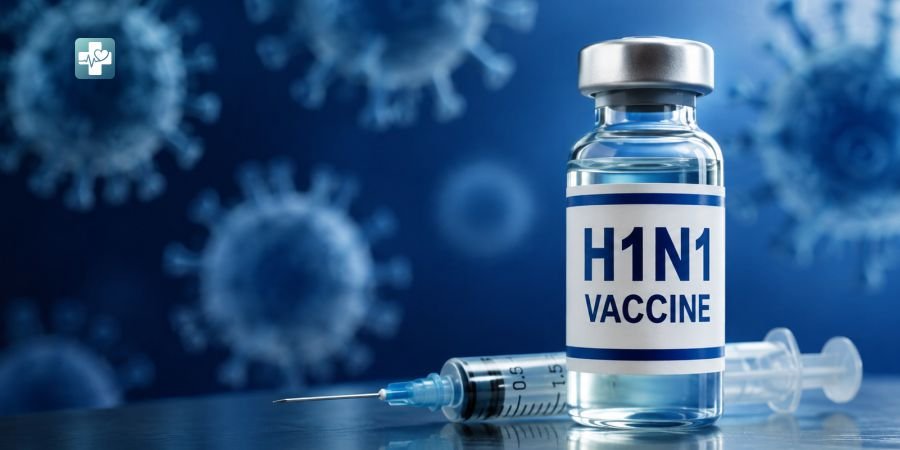
The h1n1 vaccine has made the fastest transition from emergency occurrence to regular medical practice. The emergence of a new influenza A virus in 2009 made government intervention in the production and distribution of the vaccine necessary to fight the speeding strain. Initially, the vaccine was seen as a different one from the ordinary flu vaccine. However, in a year’s time the distinction did not survive. The pandemic virus was included in the regular flu vaccine constituents.
This transition may remain unnoticed because flu vaccination became a regular procedure in a lot of countries. However, the story of the h1n1 vaccine is an example of regular adjustments of influenza vaccination. It proves that flu vaccination is not a static phenomenon.
The Virus That Arrived Between Vaccine Cycles
An inconvenient timing issue marked the start of the saga of the h1n1 vaccine. The 2009 H1N1 virus showed up after manufacturers had already started making the seasonal flu vaccine for the 2009-10 season. Thus, the new pandemic strain could not be included in the previously manufactured vaccine. Therefore, two separate vaccination efforts had to be launched: the seasonal influenza vaccination campaign and the one that specifically targeted the pandemic H1N1 virus.
The response was prompt. In the U.S., four manufacturers received approval for monovalent H1N1 vaccines in September 2009, only months after the emergence of the virus. Both inactivated and live-attenuated formulations were available. For children aged six months to nine years, it was recommended to administer two doses, while most people aged ten years and older received only one dose.
This was not just a race in science. Issues such as manufacturing capacity, supply chain management, public awareness, and choosing vaccine recipients became part of the problem as well.
Why the Pandemic Vaccine Worked So Well
A significant piece of information was unveiled by the U.S. flu season of 2009-10. According to the CDC, the success rate of the h1n1 vaccine was approximately 62%, but that’s not the most important part. An astonishing 99.5% of the H1N1 virus samples from that flu season matched the virus that was used for making the pandemic vaccine.
Such connection is vital because the influenza virus constantly evolves. Thus, judging a vaccine simply based on its ability to kill a virus that caused an outbreak many years before is not enough. Scientists must keep an eye on flu viruses present in humans and make conclusions on which strains could be crucial during the next flu season.
What also needs to be pointed out is that the experience proved the importance of surveillance. The WHO’s influenza network obtains data from labs and public health institutions across the globe, which makes it possible for specialists to advise how to create vaccines in the near future. This system becomes extremely important when it comes to the pandemic H1N1 virus becoming part of the influenza ecosystem.
The Big Change Came in 2010
By the time of the next flu season in the northern hemisphere, the h1n1 vaccine had undergone a critical change. In place of the original idea of sustaining the pandemic strain of H1N1 separately forever, health officials decided to combine the pandemic strain with the seasonal flu vaccine during the 2010-2011 flu season.
This change involved more than just an adjustment. The new trivalent vaccine now had to even incorporate an H1N1 such as A/California/7/2009 strain of virus, as well as the other two components such as H3N2 and influenza B.
In addition to this, 2010 witnessed the CDC introducing full-scale recommendations for flu vaccination for all age groups above 6 months. This made the flu vaccination go from the previously narrow method targeting only at-risk groups, to the more extensive one requiring people from all population groups to get flu vaccination.
The change itself did not mean the H1N1 virus was no longer around. It actually indicated that the H1N1 virus is now integrated into the seasonal influenza system.
What the H1N1 Story Really Changed
The lasting significance of the h1n1 vaccine is not merely that it contributed to the response to one pandemic. It paved the way for the understanding that any public health crisis can turn into a routine vaccination program.
In 2009, H1N1 was the newly emerging threat that needed a new vaccine. The transition meant that there would no more be the need for a separate vaccine for pandemic H1N1 but rather looking at it as any normal type of influenza strain that would always need monitoring.
Therefore, the history of the h1n1 vaccine is the history of adaptation. The virus that needed the establishment of a completely new emergency vaccination program became part of annual vaccination calendar. The vaccine changed along with the virus, as well as the healthcare system.
That is why the transformation from a pandemic vaccine to a routine one is important. In a lot of cases, it is sufficient not to respond with an emergency program but to learn from the problem and circulate this knowledge into ordinary medical practice.