Virtual Reality in Healthcare Education: Transforming the Future of Medical Training
Technology changes fast, shifting how experts build their abilities – health care adapts too. Inside this wave of new tools, VR stands out when teaching medicine, transforming training for future doctors, nurses, and caregivers. Instead of watching, they step inside lifelike spaces where mistakes carry no harm but teach deep lessons. Body structures appear in 3D space, operations unfold before their eyes, urgent moments play out like real emergencies. Practice happens not on people but in worlds built to mimic reality down to small details. Learning gains depth because doing beats only listening every single time. Safety stays intact while confidence grows through repeated experience. This shift feels quiet yet moves mountains beneath the surface of classrooms and clinics alike.
Now imagine stepping into a hospital room without leaving the classroom. That kind of experience was once out of reach for most students stuck with heavy books and static slides. Instead of just listening or reading, some now move through digital spaces where mistakes carry no risk but still teach hard lessons. One moment you’re facing a sudden drop in blood pressure, next you’re adjusting treatment while voices echo around you. These simulations feel alive because they demand attention like real cases do. Not every school uses them yet, but those that do see how tension, timing, and decisions fold together under pressure. Behind the screen there’s repetition – something old-school training rarely offered freely. A chance to try again shows up right after failure, not weeks later during another rotation. What used to be learned slowly across years can now speed up inside headsets. Learning by doing finds new ground when classrooms grow invisible walls.
A New Way to Learn Medicine
Learning medicine means knowing ideas on paper along with doing real tasks. Yet actually getting chances to try things often feels out of reach, especially when dealing with dangerous operations or uncommon illnesses. Into this gap steps virtual reality – offering learners a space that acts like the real world, where eyes watch, hands move, and skills grow through repetition without risk.
Inside lifelike digital environments, trainees carry out operations, identify illnesses, while handling crisis moments. Realistic clinics appear on screen – beds, monitors, surgical tools – all animated in detail. Skills grow through repetition: hands learn motions, minds sharpen choices, judgment sharpens under pressure.
The growing adoption of virtual reality in healthcare education also allows learners to repeat procedures as many times as necessary until they achieve proficiency. Unlike traditional clinical training, where opportunities may be limited, virtual simulations provide unlimited practice sessions, significantly enhancing skill development and confidence.
Enhancing Learning Through Immersive Technology
One of the key strengths of virtual reality is its ability to create immersive and interactive learning experiences. Instead of passively reading about a procedure, students can actively participate in the process, observing the effects of their decisions in real time.
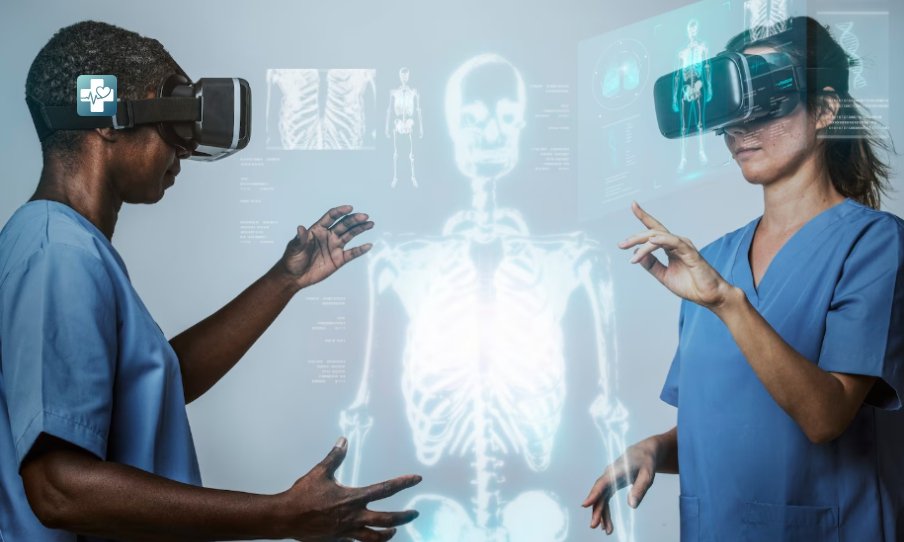
For example, medical students can explore the human body in three dimensions, gaining a deeper understanding of anatomy and physiological processes. Complex structures that are difficult to visualize in textbooks become easier to comprehend when viewed through immersive simulations. This level of engagement helps improve knowledge retention and strengthens conceptual understanding.
Another important aspect of virtual reality in healthcare education is its potential to improve collaboration and communication skills. Multi-user simulations allow students to work together in virtual clinical environments, practicing teamwork and coordination during medical emergencies. Such training prepares healthcare professionals to handle real-life scenarios with greater efficiency and confidence.
Moreover, immersive technology enables instructors to monitor student performance, identify learning gaps, and provide personalized feedback. This data-driven approach ensures that training programs are more targeted and effective.
Improving Patient Safety and Clinical Preparedness
One of the greatest advantages of virtual training environments is the ability to learn without putting real patients at risk. In traditional training settings, mistakes during clinical practice can have serious consequences. Virtual simulations eliminate this risk while still exposing learners to realistic challenges.
Medical trainees can practice responding to complex conditions such as cardiac arrest, trauma injuries, or surgical complications. These high-pressure scenarios help build resilience and prepare professionals to handle emergencies effectively.
The integration of virtual reality in healthcare education also supports standardized training across institutions. Every student can experience the same simulated scenarios, ensuring consistent skill development regardless of geographic location or resource availability.
Hospitals and medical institutions are increasingly recognizing the value of these simulations in preparing staff for rare or critical situations. By training repeatedly in realistic environments, healthcare professionals become more confident and capable when faced with similar situations in real life.
The Future of Healthcare Learning
As technology continues to evolve, the role of immersive tools in medical training is expected to expand further. The growing accessibility of advanced headsets, improved graphics, and artificial intelligence-driven simulations will make virtual learning environments even more realistic and widely available.
The continued integration of virtual reality in healthcare education will likely reshape curricula across medical schools and training institutions. Instead of relying solely on traditional learning methods, educators will increasingly combine virtual simulations with classroom instruction and clinical rotations to create a more comprehensive learning experience.
In the long term, this technology has the potential to democratize medical education by making high-quality training accessible to institutions and students around the world. Remote learning environments powered by immersive simulations could allow healthcare professionals to train from anywhere while still gaining hands-on experience.
The rise of virtual reality in healthcare education represents a significant shift in how the medical community approaches training and skill development. By combining immersive experiences with practical learning opportunities, this technology is helping create a new generation of healthcare professionals who are better prepared, more confident, and capable of delivering safer patient care.
As the healthcare industry continues to embrace digital innovation, virtual reality will play a crucial role in shaping the future of medical education and ensuring that the next generation of professionals is equipped to meet the challenges of modern healthcare.