How AI Is Transforming Medical Imaging for Faster and More Accurate Diagnosis 
Medical imaging has become one of the most significant methods in modern healthcare. Various types of radiography, computerized tomography (CT), magnetic resonance imaging (MRI), ultrasound, and other techniques are used in medical practice to visualize the internal structures of the body. In addition, they allow diagnosing diseases, screening, and monitoring the course of treatment. Given the increasing amount of information, healthcare providers are actively developing innovative technologies to analyze radiographic images faster and more accurate.
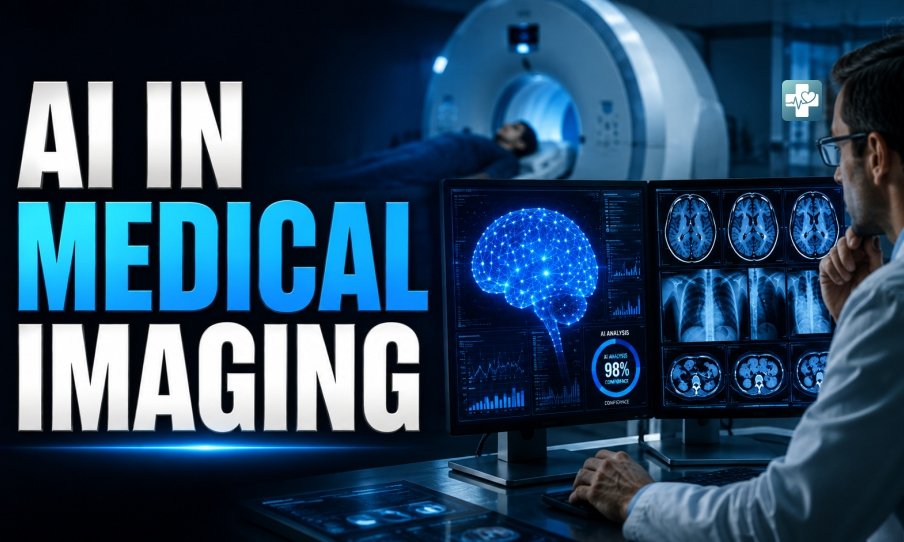
AI in medical imaging can fundamentally transform the way radiologists and clinicians work. Advanced algorithms can analyze and interpret visual data, helping clinicians detect various diseases and conditions faster. Moreover, artificial intelligence (AI) and machine learning (ML) are not intended to replace medical workers but rather to supplement their daily activities, making them easier and more efficient.
AI’s Role in Clinical Practice
The ability to analyze medical images lies in the personal qualifications and abilities of medical workers, as well as the speed and accuracy of the algorithms used. A radiologist who interprets images for hundreds of patients per day needs to have extensive experience to avoid errors. At the same time, more experienced doctors often face the problem of overloading and accordingly vision fatigue. Algorithms can solve this problem by being applied to analyze radiographs and CT scans.
Using ML algorithms allows clinicians to obtain additional data about the patient’s health state. To achieve this, such programs must first be trained on a database of images of diseased tissues. After that, algorithms will be capable of identifying similar patterns in new pictures, allowing clinicians to distinguish diseased tissues from healthy ones. In addition, algorithms can be useful in solving specific tasks, such as measuring tumor sizes or detecting fractured bones.
One of the major advantages of AI in medical imaging is its ability to process information rapidly. An algorithm can analyze an image in a fraction of the time required for manual review. This can be particularly useful in emergency settings, where rapid identification of conditions such as strokes, internal bleeding, or severe injuries can influence treatment decisions.
However, speed alone is not enough. Medical imaging systems must also demonstrate reliability and clinical usefulness. AI-generated findings therefore need to be interpreted alongside patient history, symptoms, laboratory results, and professional medical judgment.
Improving Detection and Diagnostic Workflows
A significant application of AI in medical imaging is assisting clinicians in detecting abnormalities at an early stage. Some diseases produce subtle changes in medical images that can be difficult to identify, particularly when they are small or visually similar to surrounding tissue. Computer-assisted systems can flag potentially suspicious regions and draw the clinician’s attention to them.
For example, algorithms can assist in examining mammograms for signs that may require further investigation. Similar systems are being developed for lung imaging, brain scans, cardiovascular imaging, and several other areas of medicine. These tools can help prioritize cases, identify potential abnormalities, and reduce the amount of repetitive work involved in image interpretation.
Artificial intelligence can also contribute to workflow optimization. Instead of treating every scan in exactly the same way, intelligent systems can help categorize examinations according to urgency or potential findings. A scan that appears to contain a critical abnormality may be brought to a radiologist’s attention sooner, potentially improving the efficiency of emergency care.
Another valuable application is automated measurement. Certain conditions require clinicians to compare the size, shape, or volume of structures across multiple scans. Automated tools can perform these measurements consistently, reducing manual effort and making it easier to monitor changes over time.
Challenges Healthcare Providers Must Address
Despite its potential, AI in medical imaging comes with significant challenges. Medical data is highly sensitive, and healthcare organizations must ensure that patient information is protected throughout the development and deployment of intelligent systems. Data privacy, cybersecurity, and regulatory compliance are therefore essential considerations.
Another challenge is the quality and diversity of training data. An algorithm trained primarily on images from a particular population, hospital, scanner, or demographic group may not perform equally well in every clinical environment. Developers and healthcare organizations need diverse and representative datasets to reduce the risk of biased or unreliable results.
There is also the issue of explainability. Clinicians may hesitate to rely on a system that produces a recommendation without providing meaningful information about how that conclusion was reached. Transparent validation and clear clinical integration can help professionals understand when an algorithm is useful and when its recommendation should be questioned.
Most importantly, technology should complement rather than undermine clinical expertise. AI in medical imaging can identify patterns and provide useful assistance, but doctors remain responsible for considering the complete clinical picture. Human oversight is particularly important when an automated result conflicts with symptoms, medical history, or other diagnostic evidence.
The Future of Intelligent Medical Imaging
The future of AI in medical imaging will likely involve closer integration between intelligent software and existing healthcare systems. Instead of functioning as standalone tools, AI applications may become part of routine radiology workflows, automatically analyzing scans, organizing cases, assisting with reporting, and helping clinicians compare current images with previous examinations.
As algorithms become more sophisticated, their role may expand from simple detection toward broader clinical decision support. They could help identify patterns across imaging studies, patient records, and other medical information, giving healthcare professionals a more comprehensive view of individual cases.
The technology will not eliminate the need for radiologists or other medical specialists. Instead, its greatest value may come from reducing repetitive tasks and allowing professionals to spend more time on complex cases, patient communication, and clinical decision-making.
Ultimately, the success of AI in medical imaging will depend not only on technological advancement but also on responsible implementation. Strong validation, secure data practices, regulatory oversight, diverse training data, and continued human supervision will be essential. When these factors are addressed properly, intelligent imaging technologies can become an important part of a faster, more consistent, and increasingly sophisticated healthcare system.