Navigating the Modern Healthcare Supply Chain to Ensure Higher Patient Care
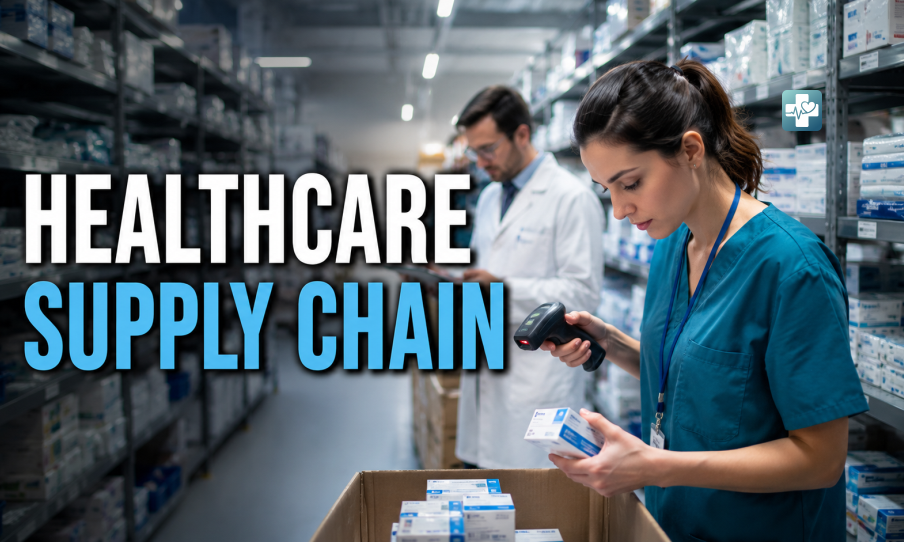
A shift has quietly taken root in today’s life sciences world. Once, the system behind medical tools, drugs, and surgery supplies ran unseen. Getting things where they needed to go – that was enough. Now everything runs differently. Out here, chaos never really settles. Prices climb because supplies get shaky across continents. Money squeezes hit harder now – they shift what matters inside big groups. Hospitals and makers see it clear: saving time means more than saving cash. When things flip fast worldwide, getting gear where it’s needed keeps people alive. Old split-up chains won’t cut it anymore. Everything links up tight now, seen clearly, ready when surprise hits hard. Healthcare supply chain.
From Moving Boxes to Managing Clinical Value
Back then, moving medicine around meant just buying cheap and stacking shelves. Because suppliers haggled hard, storage rooms overflowed waiting for emergencies. Now, those old ways crumble – pressure from today’s economy won’t allow it. Instead of fixating only on price tags, hospitals now judge purchases by how well they serve patients. Seeing supply choices through patient care changes everything in the modern healthcare supply chain.
A single missing part can stop an operation in its tracks. If a vital machine waits too long to arrive, procedures get scrapped without warning. Patients stay longer than planned simply because tools are out of stock. One absent component shifts how doctors must act that day inside the healthcare supply chain.
Fighting back, today’s supply chain heads create clear structures linking buying teams directly to medical staff. Instead of following one doctor’s choice, hospitals now assess supplies using shared clinical proof – cutting down on excess variety. Because of this shift toward uniformity, placing orders becomes easier, storage needs shrink, plus bulk buying grows stronger. With fewer distinct products moving through, clinics guard against sudden gaps in availability while still delivering steady treatment quality across the healthcare supply chain.
Driving Resilience and Traceability with Advanced Digital Transformations
The days of tracking high-stakes medical inventory with manual spreadsheets and desperate phone calls are over. Siloed data structures are actively being replaced by unified, cloud-based enterprise resource planning systems. These modern platforms seamlessly integrate supply chain data directly into electronic health records and financial databases. This level of system interoperability provides absolute transparency from the manufacturer down to the exact point of care within the healthcare supply chain.
Predictive analytics and machine learning are also turning reactive operations into proactive shields. By analyzing historical consumption patterns alongside macro-environmental data, intelligent algorithms can forecast impending shortages weeks before they impact a hospital floor in the healthcare supply chain.
Furthermore, stringent regulatory frameworks are driving the urgent adoption of advanced product tracking. Under federal mandates like the Drug Supply Chain Security Act, the industry is moving toward complete electronic interoperability and full serialization. Every individual package of medicine or medical device must be fully traceable across its entire lifecycle. This digital evolution does more than just satisfy regulatory audits. It actively safeguards the entire delivery ecosystem against counterfeit pharmaceuticals, accelerates the speed of product recalls, and gives logistics managers the real-time visibility required to reroute shipments instantly during a crisis affecting the healthcare supply chain.
Mitigating Operational Risks Through Strategic Regional Diversification
The profound vulnerabilities of over-reliance on single-source suppliers and highly concentrated foreign manufacturing regions have forced a massive shift in sourcing philosophies. Lean, just-in-time inventory strategies are being carefully reassessed in favor of strategic redundancy. Healthcare organizations are intentionally diversifying their vendor portfolios, particularly for high-dependency items such as personal protective equipment, life-saving pharmaceuticals, and specialized surgical implants.
Geography is playing a central role in this risk-mitigation strategy. Global enterprises are increasingly adopting nearshoring and regionalization practices, bringing production facilities physically closer to their primary end markets. While setting up regional manufacturing or holding buffer stocks in local hubs can introduce higher upfront costs, it provides an invaluable insurance policy against geopolitical friction, unexpected trade tariffs, and climate-induced shipping delays throughout the healthcare supply chain.
Furthermore, modern risk management extends deep into the secondary and tertiary tiers of the supplier network. Leading organizations are no longer just auditing their primary distributors. They are actively mapping out where raw chemical ingredients and base medical components originate, ensuring that a bottleneck at a single sub-tier facility cannot completely halt the production of vital medical supplies.
Designing Eco Friendly Sourcing Models for Sustainable Healthcare Delivery
Environmental sustainability has rapidly transitioned from a corporate compliance checklist item to a primary criterion in modern medical procurement. Health systems are massive consumers of energy and creators of specialized waste, prompting a widespread push for greener logistical workflows. When evaluating potential vendors, purchasing committees are looking closely at verified emissions data, product lifecycle impacts, and corporate carbon reduction targets.
This paradigm shift is fundamentally changing product design, packaging, and shipping methods within the life sciences sector. Manufacturers are actively re-engineering protective packaging to minimize physical waste and optimize cargo space during transportation, which directly lowers shipping-related fuel consumption.
Simultaneously, the industry is embracing a circular economy mindset by expanding the use of validated re-sterilization processes, investing in safely refurbished medical equipment, and utilizing eco-friendly logistics providers. By integrating strict environmental, social, and governance standards directly into the bidding and contract evaluation processes, the medical community is ensuring that the physical systems used to heal patients do not inadvertently contribute to global environmental degradation. Ultimately, building a sustainable, digitally sound, and clinically integrated operation is the only path forward to guarantee stable, continuous medical care for vulnerable populations worldwide through a resilient healthcare supply chain.