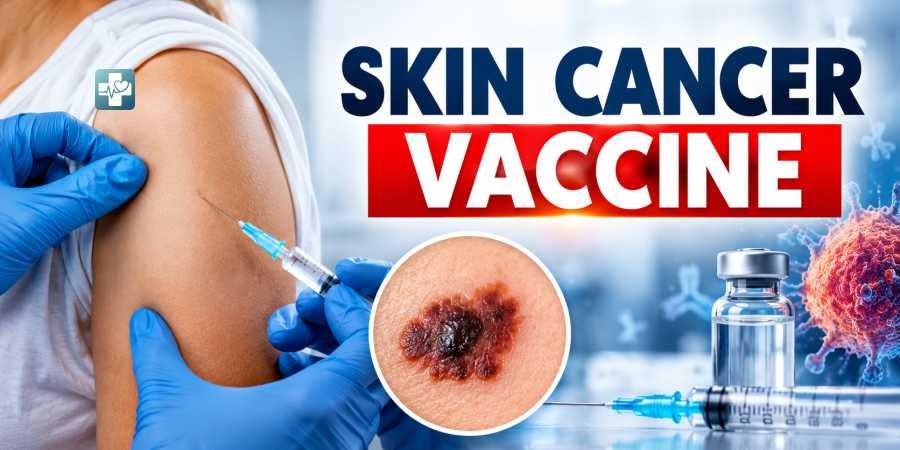
How the skin cancer vaccine Could Help Doctors Target Cancer More Precisely and Reduce the Risk of Recurrence
Traditionally, cancer treatments have involved removal of tumours, destruction of the cancerous cells, or prevention of their multiplication. However, scientists are now trying out yet another strategy by enabling the immune system to learn and react to the unique characteristics of an individual’s cancer. Such strategies may be useful for future cancer management since there are many situations where the patient will need ongoing treatment following surgery.
The skin cancer vaccine is important since it offers a new means of tackling melanoma, a type of skin cancer. It should be noted that the vaccine does not behave like any other vaccine in the sense that it is not meant to prevent the body from contracting an infection. Its aim is to enable the immune system to recognize cancerous cells which may still persist even after surgery.
Turning a Patient’s Cancer Into a Treatment Target
Each tumour has its unique set of biological alterations. These alterations give rise to certain abnormal proteins which make the tumour cells distinguishable from the normal cells. There is scope for scientists to examine the difference and use it to find out how to train the immune system to recognise cancerous cells.
Personalised messenger RNA (mRNA) technology is a way of achieving the above objective. First, the doctors collect samples of the tumours and geneticists analyse their biological features and create personalised vaccines using the tumour markers identified. It is hoped that the vaccine will ensure that the immune cells have been prepared to recognise the markers in order to destroy the cells which contain them.
This is different from administering the same treatment to each and every patient. In this case, the treatment depends upon the information that is collected about the specific tumour of the patient.
Why the Results After Surgery Matter
While surgery will be able to remove the visible tumor, there still could be some cancer cells invisible to the eye that can cause cancer to come back. Thus, patients with high-risk disease are often given additional therapies after surgery.
Current scientific research makes personalized cancer therapy more interesting due to the positive results found by scientists during their studies. The researchers have been exploring combinations of mRNA-based personalized treatment in addition to standard immunotherapy such as pembrolizumab in patients with high-risk melanoma removed surgically.
The purpose of the therapy is to teach the immune system how to detect cancer markers while using pembrolizumab to support the immune reaction against cancer. The research provides encouraging results that indicate the combination may reduce the risk of recurrence for selected patients. However, further evaluation of this combination is needed in terms of long-term results, adverse reactions, and patient selection.
All these results are important because in the future this vaccine might become an additional tool for specialists to treat selected patients after the operation. However, these results do not say that this treatment is capable of eliminating all cancer cells.
What Patients Should Understand About the Research
However, there is still the distinction between an encouraging clinical trial and an existing treatment. Personalized vaccines for melanoma treatment is a field of research in development, and availability of personalized medicine depends on a particular treatment, regulations, and the healthcare system of the country where a person seeks medical attention.
There is also a clear scope of the research. High-risk melanoma clinical trials do not indicate that any other types of skin cancers, such as basal cell carcinoma or squamous cell carcinoma, could be treated in a similar way. Neither does the research confirm that a vaccine can substitute surgery, immunotherapy, or other treatments.
Anyone who is considering taking part in a clinical trial can consult an oncologist about their eligibility, potential risks, and other options as well as unknowns. It is crucial to realize that the skin cancer vaccine is a promising treatment method.
The Challenges Behind Personalized Treatment
Personalized therapy involves more than creating an appealing biological agent. Medical professionals have to collect appropriate tumor samples, find the right target, create the treatment, and schedule the administration of the treatment within the context of the patient’s therapy.
There are also issues of time and money. Personalized production might be more complex than the production of regular medicine, and availability may vary between healthcare providers. More research is needed to assess safety, manufacturing stability, duration of action, and the people that would benefit from the new approach.
Another open question is regarding the longevity of the results. It is good when the therapy can prevent or postpone recurrence, but researchers still have to determine if the treatment helps increase life expectancy and what is the trade-off between the possible advantages and disadvantages in the long run.
Prevention and Early Detection Still Matter
Despite all the advancements in the field of treatment, there still remains a need for reduction of ultraviolet exposure, sun protection, avoidance of tanning beds, and consulting a doctor about any changes in moles and other lesions on the skin. If you have a new growth, a wound that does not heal, and any change in appearance, seek professional advice.
Individuals who are prone to developing skin cancer need to consult a healthcare provider about skin checks. Early assessment may be helpful in determining suspicious changes.
Although scientists discover new treatment methods, prevention and early detection are still key components of treatment of skin cancer. Although the skin cancer vaccine may help in future treatments, it cannot replace all of these preventive measures.
Conclusion
Individualized tumor-based cancer immunotherapy is a means by which in-depth information about the patient’s particular tumor can be used to guide his own immune system. Studies involving vaccines for melanoma have made advances possible, but there are still many questions that need answering regarding efficacy, approval, affordability, and accessibility.
The melanoma vaccine is a potential solution in the ongoing attempt to prevent the recurrence of melanoma following surgical procedures. In the end, the path to the future will be guided through clinical trials and choices. For now, however, responsible skin cancer care involves medical advice, treatment, sun protection, and screening.