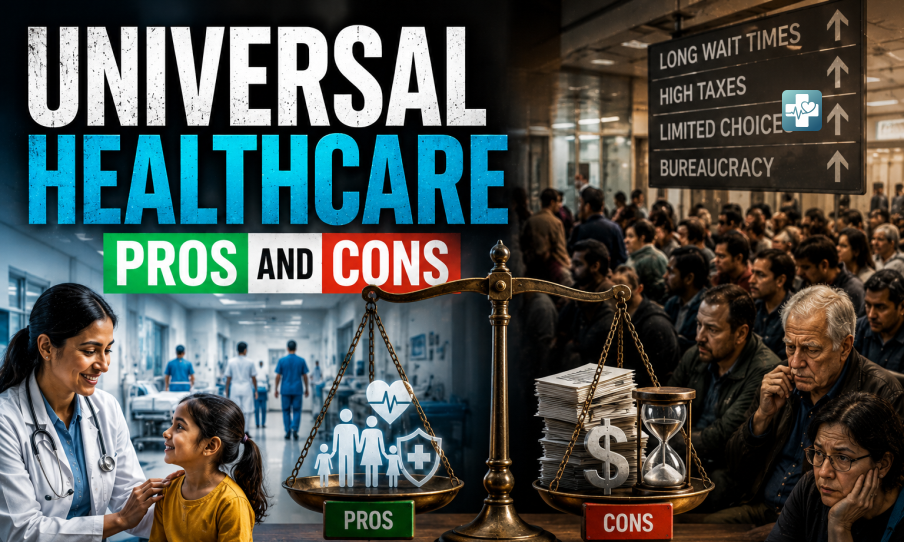
Navigating the Global Debate on Universal Healthcare Pros and Cons
One big idea keeps sparking arguments across countries: giving everyone health care no matter their money. Though meant to protect people like clean water or schools, making it real means tough choices about taxes, jobs, and who decides what care matters. Some places run it through one government fund, others mix private plans with strict rules – each path shaped by history, trust, and how much risk people accept. Looking close shows gains in safety and fairness weighed against slow changes, high costs, and limits nobody likes but somehow lives with. Universal healthcare pros and cons continue shaping political and economic discussions worldwide.
The Benefits of a Uniform Care Approach
One big reason people support universal healthcare? It stops medical bills from wiping out families. When one serious health crisis hits, costs pile up fast under private insurance models – sometimes lasting decades. Spreading those risks across everyone means care follows sickness, not savings accounts. Survival odds shift when money doesn’t decide who gets help. Fairness grows where income no longer picks winners in illness. Debates around universal healthcare pros and cons often begin with this issue of financial protection.
A single health setup moves medical attention to staying well before problems start. Because people pay nothing upfront when seeing a doctor, they tend to show up sooner for tests, shots, or regular exams. Spotting something like high blood pressure early costs much less than handling heart trouble later in an ER. Healing works better that way too. With years passing, this method builds stronger communities, able to handle setbacks without breaking down. Fewer sick days at work follow naturally from it. Experts discussing pros and cons regularly highlight preventive care as a major advantage.
From an administrative perspective, universal healthcare drastically streamlines operations. In a single-payer framework, hospitals and clinics do not have to navigate hundreds of different private insurance plans, each with its own complex billing codes, copay rules, and pre-authorization requirements. This reduction in administrative overhead saves billions of dollars annually, allowing medical institutions to direct more resources toward actual patient care and medical equipment rather than bureaucratic paperwork. Furthermore, governments gain massive bargaining power to negotiate lower prices for pharmaceuticals and specialized medical devices, keeping national healthcare expenditures under tighter control. These administrative efficiencies are central to conversations about universal healthcare pros and cons.
The Complex Challenges and Disadvantages of Total Public Coverage
Despite its substantial benefits, universal healthcare introduces profound logistical and economic challenges, most notably the issue of extended wait times. When financial barriers to medical access are removed, demand for services surges exponentially. In many single-payer nations, this influx leads to long queues for non-emergency or elective procedures, such as hip replacements, cataract surgeries, or specialized diagnostic imaging. While emergency trauma care is almost always prioritized, patients facing chronic pain or non-life-threatening conditions can find themselves waiting months for a consultation or procedure, which can diminish their immediate quality of life. Long waiting periods remain one of the strongest arguments in debates about universal healthcare pros and cons.
The financial reality of funding such a massive enterprise represents another major hurdle. Universal healthcare requires an enormous amount of public capital, which inevitably translates into significantly higher income tax rates or sales taxes for citizens and corporations. Critics argue that this heavy tax burden can stifle broader economic growth and reduce an individual’s disposable income. Additionally, because the system is tied directly to government budgets, it becomes highly vulnerable to political shifts and economic recessions. If a nation faces a severe downturn, healthcare funding may be cut, leading to understaffed hospitals and deteriorating infrastructure. Economists analyzing universal healthcare pros and cons frequently point toward taxation concerns.
Furthermore, a heavily centralized system can inadvertently suppress innovation and individual choice. In a competitive, privatized market, pharmaceutical companies and medical technology firms are highly incentivized to develop cutting-edge treatments to capture market share. Without the profit motives of a competitive marketplace, the pace of medical breakthroughs can slow down. Medical professionals may also experience lower caps on their earnings, which can cause doctor shortages or prompt top-tier medical talent to migrate to countries with privatized models. Finally, citizens lose the freedom to customize their coverage, forcing everyone into a standardized plan that may not accommodate specific, niche health preferences. Discussions involving universal healthcare pros and cons also focus heavily on innovation and medical freedom.
Balancing Equity and Efficiency in Modern Healthcare Design
Ultimately, the universal healthcare debate is not a simple choice between a compassionate system and an efficient one; it is a delicate balancing act. Striking the right equilibrium requires policymakers to carefully weigh the moral imperative of universal access against the harsh realities of rising medical inflation, aging populations, and finite public budgets. Many countries are increasingly exploring hybrid models, where a robust public safety net guarantees essential care for every citizen, while a regulated private insurance market remains available for those who wish to pay extra for quicker access or premium amenities. Policymakers continue revisiting universal healthcare pros and cons while designing these hybrid systems.
As technology, artificial intelligence, and personalized medicine continue to reshape clinical environments, the structural framework of health delivery will inevitably evolve. Whether a nation chooses a purely public system or a market-driven approach, the ultimate goal remains identical: building a sustainable infrastructure that protects human life without bankrupting the society it is designed to serve. Understanding the inherent pros and cons of universal healthcare is the first step toward building a system that achieves both financial viability and human dignity. Continued research into universal healthcare pros and cons may ultimately define the future direction of global healthcare policy.
Public opinion around universal healthcare pros and cons will likely remain divided as societies continue searching for the most sustainable and equitable healthcare framework possible.